
By Annette C., Adrian C., Ariam C.
As school mass shooting episodes have risen up to at least 354 it is hard not to wonder how they affect those who witness them. School mass shootings do not only leave physical injuries but also psychological ones that require healing. Among them, anxiety, depression and PTSD. School mass shootings are the first-line traumatic events that can trigger PTSD. A study led by Lensey Miron PhD, a Northern Illinois University graduate, revealed that about twelve percent of mass school shootings survivors reported persistent post-traumatic stress disorder (PTSD), a number higher than the average prevalence of PTSD among trauma survivors as a whole. Despite all the negative mental health issues that arise from school mass shootings few in depth efforts have been made to help cope with trauma and aid in preventing it from becoming long term.
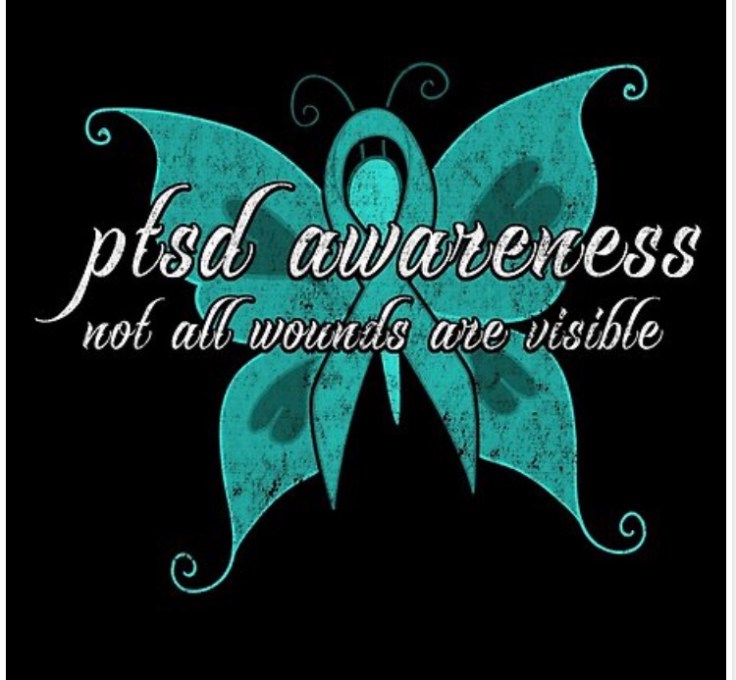
After an event like Parkland ASD is expected right after the event. Acute Stress Disorder (ASD) is very similar to PTSD, the only differences being that ASD can only be diagnosed in the first month after a traumatic event and it focuses more dissociative symptoms shown by the victim. It would actually be considered not normal if the victims did not show any signs of trauma. Although trauma is expected immediately after the event, mental recovery for those affected is not always the primary pursuit. Prolonged trauma, PTSD, plays a big role is the victim’s life causing them to suffer from anxiety, depression and sometimes resulting in possible suicide. In the book Parkland, Dr. Ley states,”the really important thing in trauma work is finding out what the individual needs”. By this Dr. Ley suggests that not all the victims need the same treatment or coping strategies. This makes sense because, not only does one victim experience less of the traumatic event but in turn results in certain survivors needing less treatment as to one who was affected more severely . In order to help those experiencing PTSD we need to fully understand each individual and look at not only this event but also speak about any other mental health issues they were experiencing such as depression, anxiety, substance abuse, and any other mental illness they might be facing.
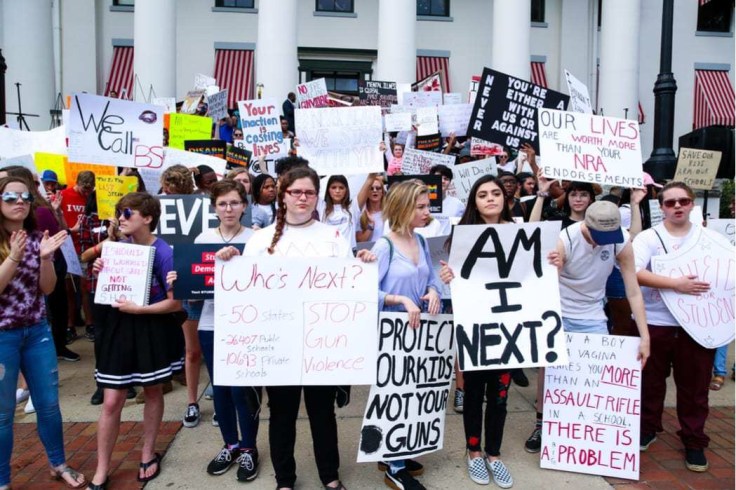
https://www.kars4kids.org/blog/florida-mass-shooting-ptsd-teens/amp/?usqp=mq331AQCKAE%3D
This picture represents how the people come together to try to stop something when others cannot fight for themselves anymore.
Violence and trauma in adolescence causes children to face long-term mental health consequences.In their article call “The Fact of High School Shooting on School and Student Performances,” Louis-Phillipe. Beland and Dongwoo Kim examine the relationship between school shootings and high school student success. They say that “ adolescent violence exposure is associated with poor mental health outcomes later on in life” and “ exposure to violence has lasting mental health consequences“(114). This means that when children experience or witness traumatic events like a school shooting, they harbor these images and are traumatized. PTSD affects them in that everyday occurrences like sudden, loud noises triggers them, and they were turned to a flight or fight response. Meaning that trauma and violence in pubescence and children have longer lasting psychopathology. But this also plays into their life because with every new shooting it reminds the survivors of past shootings of the fear and the pain they felt that day.
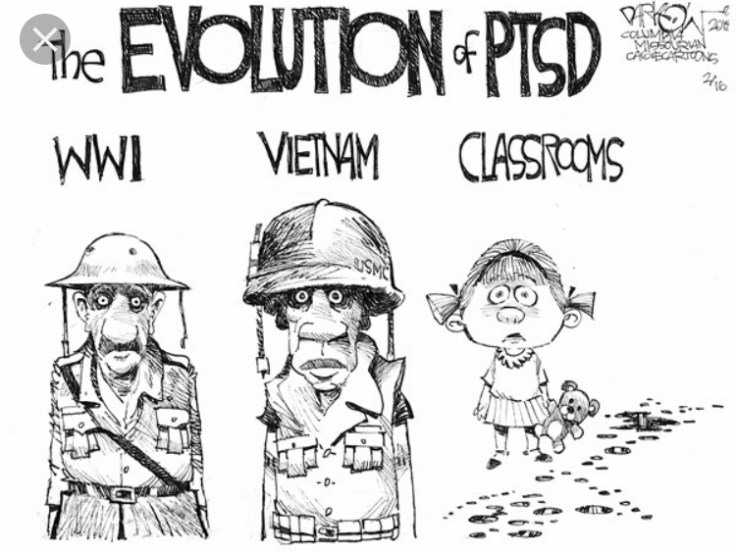
https://www.caglecartoons.com/viewimage.asp?ID=%7BC99AA104-DE5E-437D-878C-2C396B541656%7D
Survivors relive their past traumas everytime a new shooting occurs. In the article “Columbine Survivors Reflect, and Reckon with Specter of Future Shootings” by Julie Turkewitz explains how after twenty years the Columbine survivors are still facing he trauma they felt that day. “ every time there is a new attack, said Tami Diaz, thirty-six , another survivor,’ everything has to reheal -it’s like ripping off a scab.’” This goes to show that with recent school shootings the survivors of the Columbine attack relive their fear they felt during the attack. Thus letting the cycle continue and have more lasting effect on the survivor long after this horrific tragedy happened. Proving that the survivors face their trauma long after what happened to them and because of the current increase of school shootings it’s never ending no matter how long it has been.
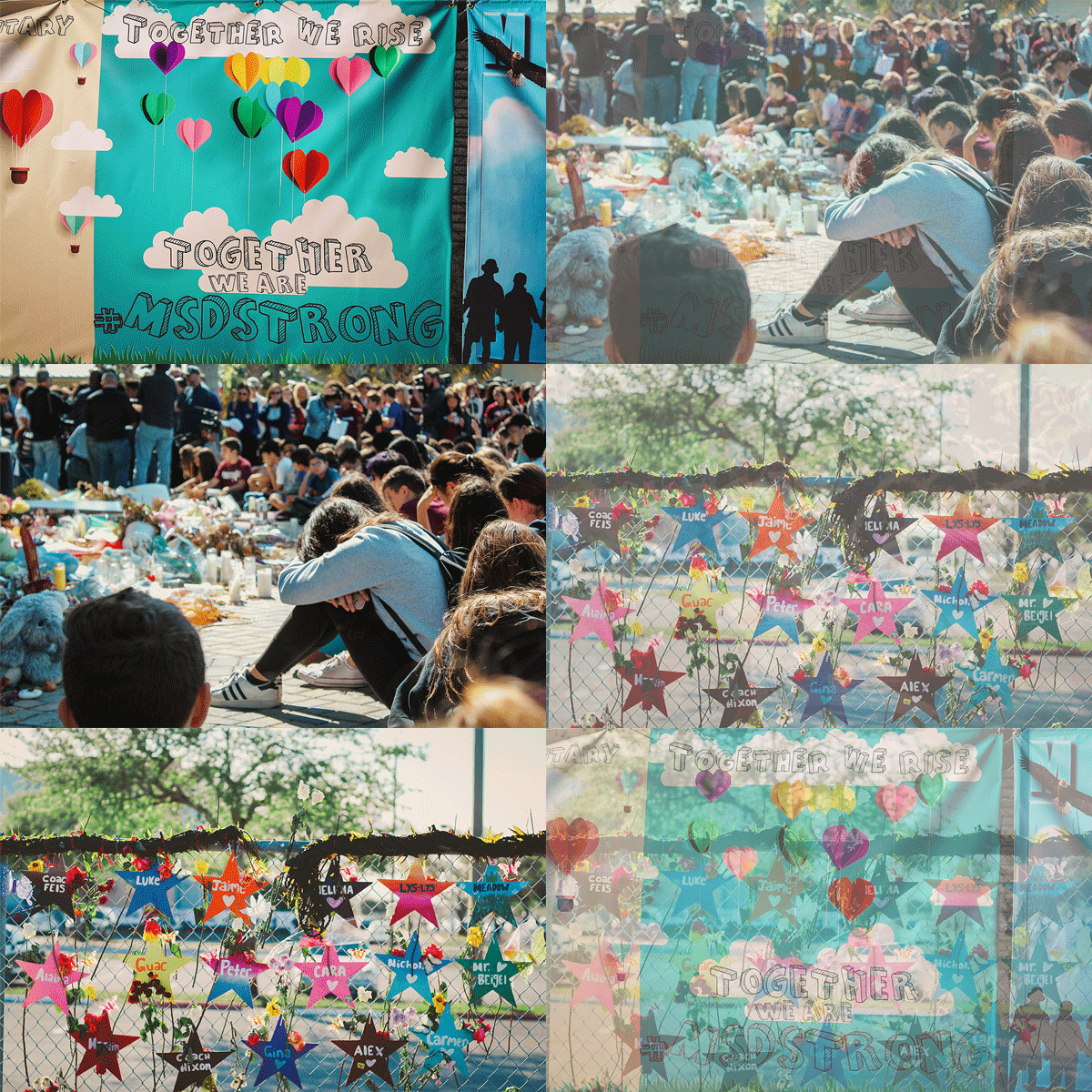
https://www.nytimes.com/2018/04/04/us/parkland-shooting-yearbook.html?usqp=mq331AQCKAE%3D
As mental health care professionals,we are not equipped to stop school shootings, but we can help those cope with the trauma of such an event. No, but it is possible to change the outcome of the aftermath of the victims of the school shootings; By effectively integrating professional psychological therapies in the in a zero period or six period, by learning from the victimes teach us about teach us through there methods will help us going in the future. With the Survivors of the Columbine massacre they showed us that the effects of that tragedy. With the necessary changes they will assentaly low the effect of PTSD in the surviving victims of school shooting. Although we don’t have the power to end school shooting; We do have the power to effect real change for the victims.
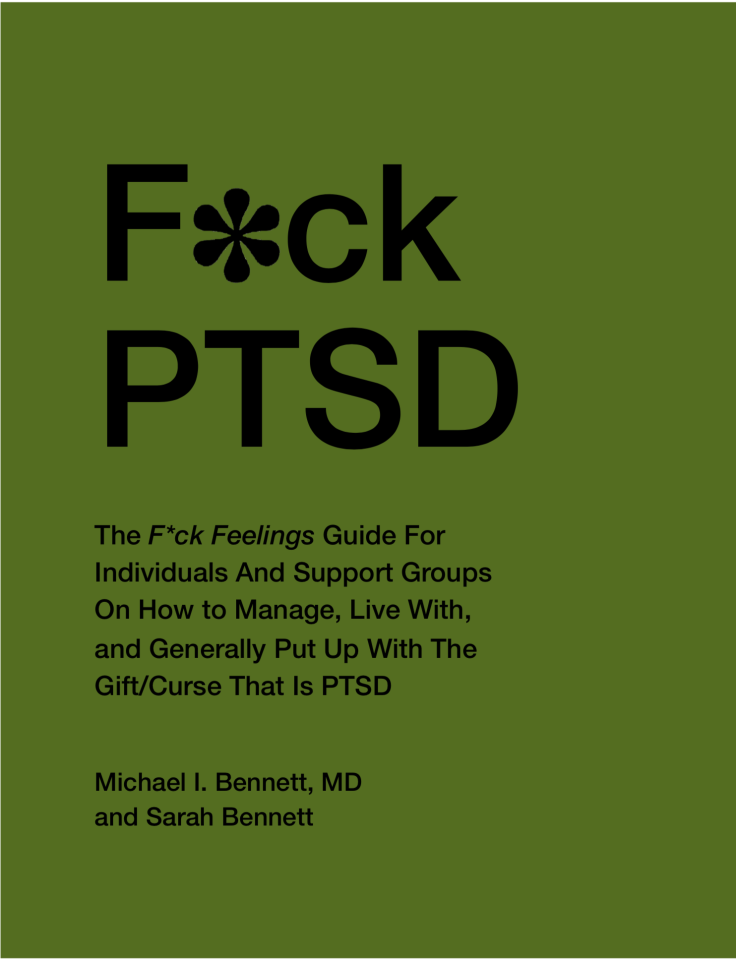
http://fxckfeelings.com/fck-ptsd/
Work cited
1.
http://navigatorcounseling.com/wp-content/uploads/2017/02/Acute_Stress_Disorder.pdf
http://faculty.bus.lsu.edu/papers/pap15_05.pdf
https://www.google.com/amp/s/www.nytimes.com/2019/04/20/us/columbine-anniversary-parents.amp.html
 It’s Better Together Than Going It Alone

Leave a comment